


By Amelia Pérez
For a natural soap lover, there is no moment more pleasant than trying out a new bar. Unwrapping it to release its aroma and being able to enjoy its texture. But we must be aware that there comes a time in the life of every natural soap when it becomes too small and inconvenient to use.
Recently, a loyal customer told me she had accumulated several scraps of bars in her soap dish. "I would like to be able to use every one of them," she said, "What do you recommend I do with them?". Well, below I am going to give you some tips to give our natural soaps a second life. A hot process that can be done easily at home. A great plan to do with children without the risk of contact with harmful ingredients.*
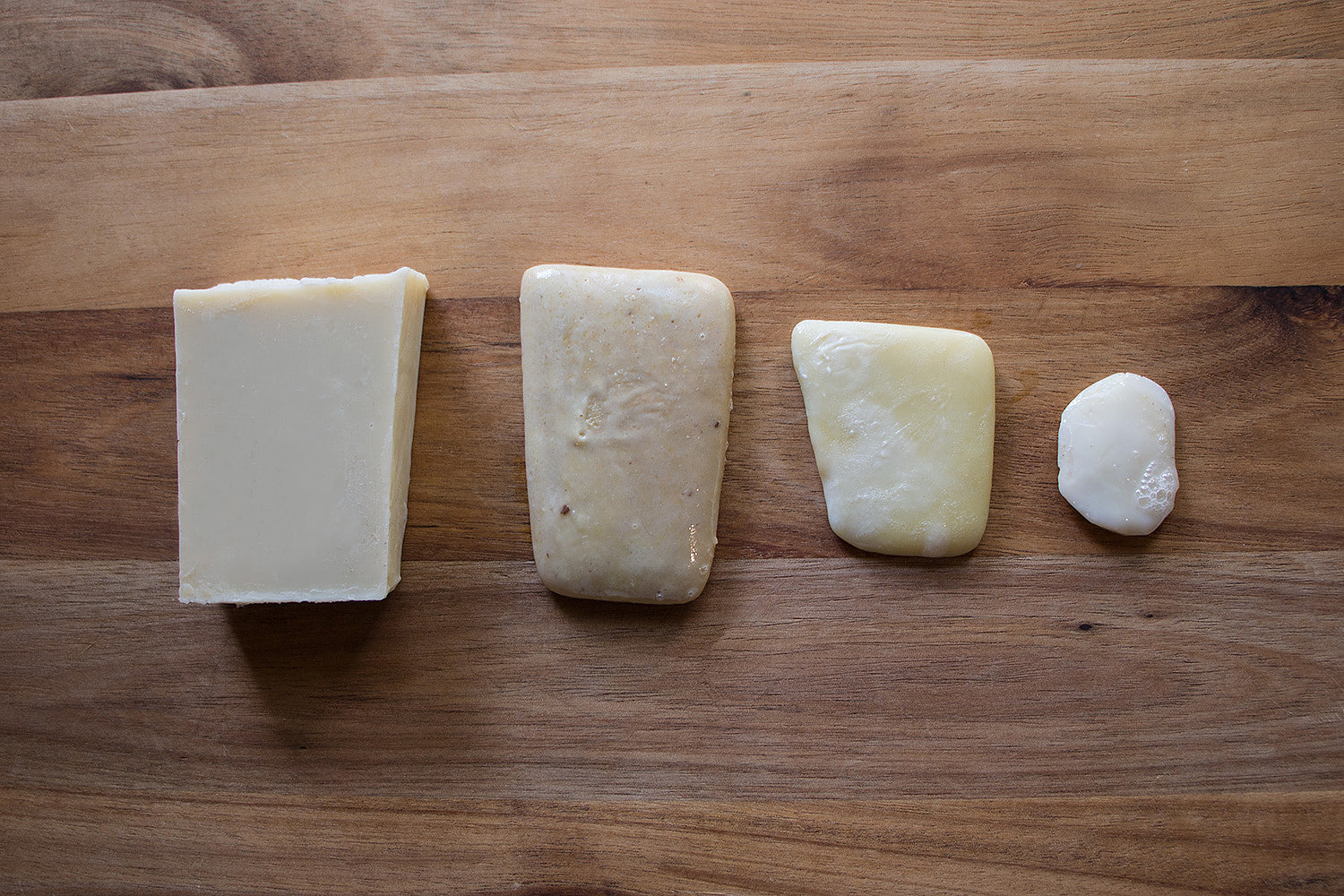
The life stages of our natural soap.
How to make 100% use of natural soaps and give them a new life.
Method 1:
What we will need:
- Natural soap scraps.
- A saucepan for heating.
- A stove or burner.
- A knife or cheese grater.
- Water.
- A spatula.
- Molds.
- A scale.
- Blender (optional).
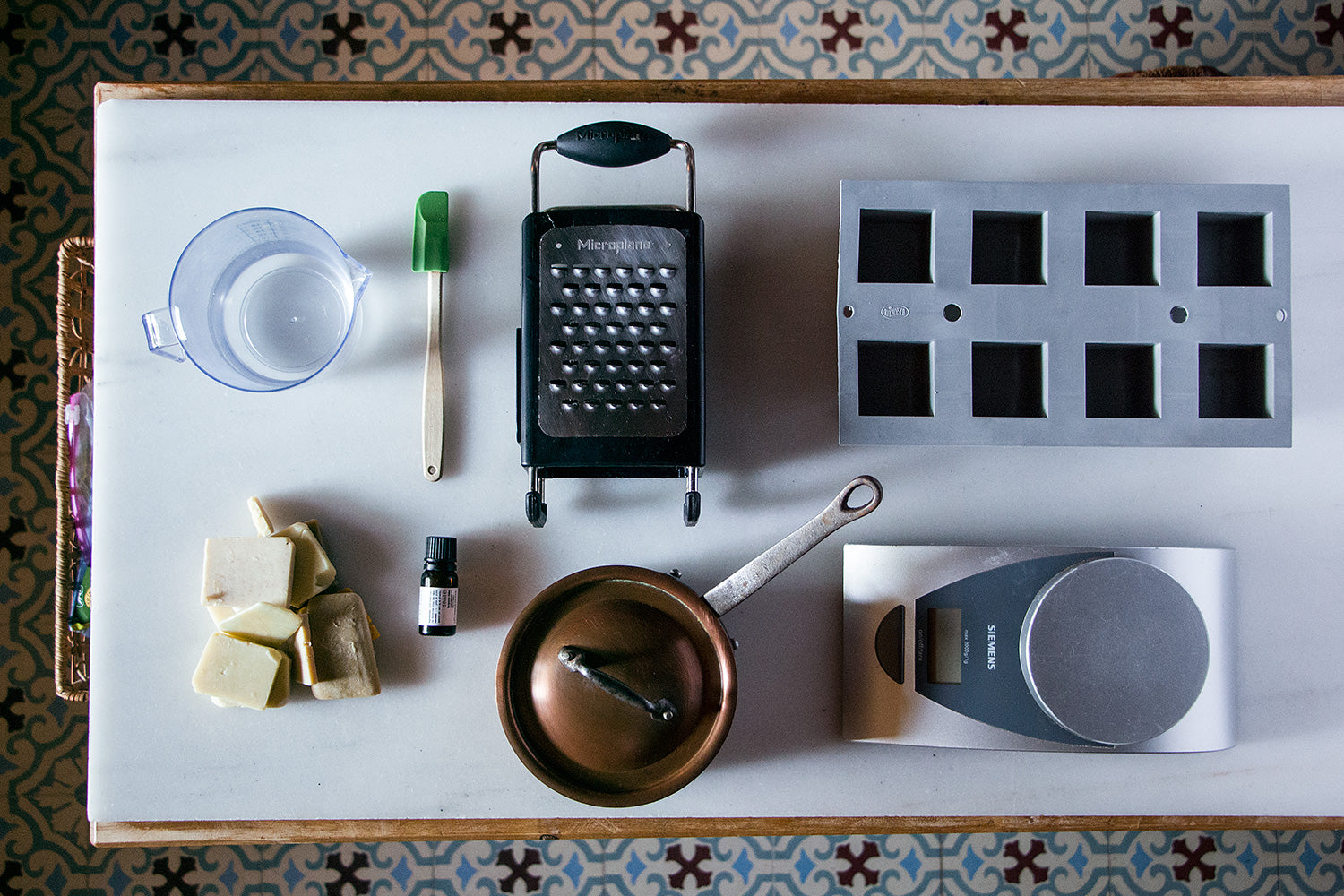
Once we have the utensils ready, we begin the process.
Before starting, it is important to have the aforementioned utensils ready and some molds that fit the amount of soap we are going to use. If you do not have a professional mold, you can use matchboxes or any similar small cardboard box whose size is appropriate for the final amount of soap. We can only guarantee the functionality of this process with Los Jabones de Mi Mujer; we do not know if it applies to soaps with other compositions.
We rinse the soap pieces well to ensure they do not contain traces of hair or dirt. If we have 100 g of soap, we add 100 g of water—it can be tap water, distilled water, or a plant hydrolat (obtained by distillation). Keep in mind that 100 g is approximately equivalent to a new bar of soap.
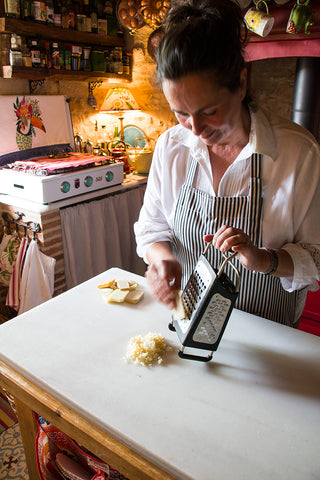
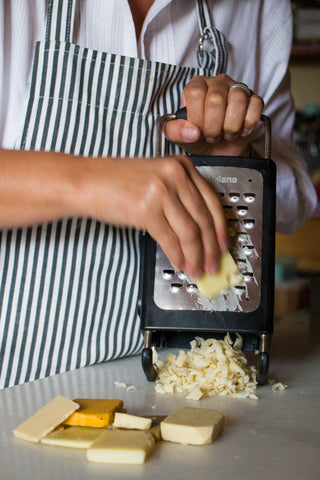
Our natural soap is soft and creamy and grates like cheese.
Next, we grate the soap scraps with a cheese grater or cut them with a knife, leaving pieces as small as possible, similar to the size of a lentil. Different types of soap can be mixed; the color or aroma is irrelevant.
Weigh equal parts of soap and water (e.g., 200 g of soap per 200 g of water).

We pour the grated soap shavings into the saucepan.
Place the soap and water in a saucepan over low heat so that it melts and the soap emulsifies with the water. This can take about 15-20 minutes, stirring constantly.
To speed up the emulsification process, you can blend the mixture with an immersion blender before putting the saucepan on low heat.

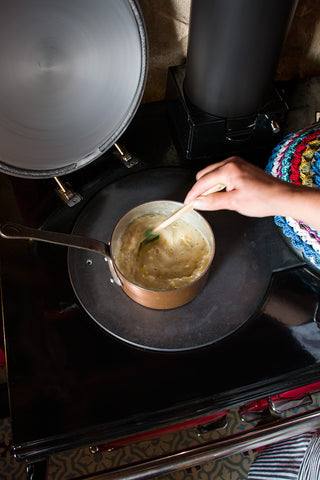
We add the water to the saucepan over low heat and begin to stir.
When it is thickening, remove the saucepan from the heat and continue stirring the mixture for 5 more minutes. At this point, we will add a few drops of essential oil to our liking to give the new bar a bit of aroma, and we will integrate it by stirring well.
Next, pour the mixture into the molds. In one or two days, you will be able to remove the bar from the mold and let it dry in a ventilated place covered with a clean cloth. At this point, you can add fresh roses or any decoration you consider.
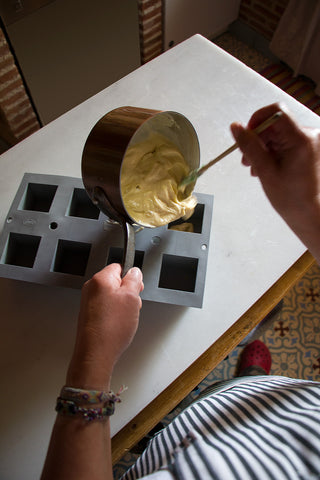
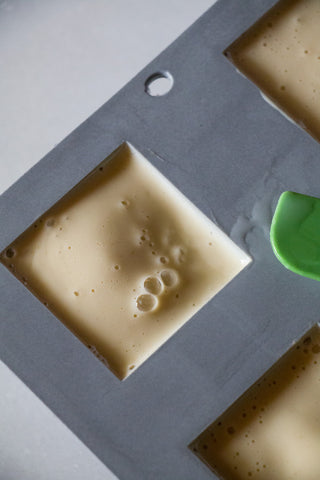
Carefully, we pour the mixture into the mold with the help of the spatula.
Drying
After a week, check that the soap is hard by pressing with your fingers. If it is, you can now use your new bar.
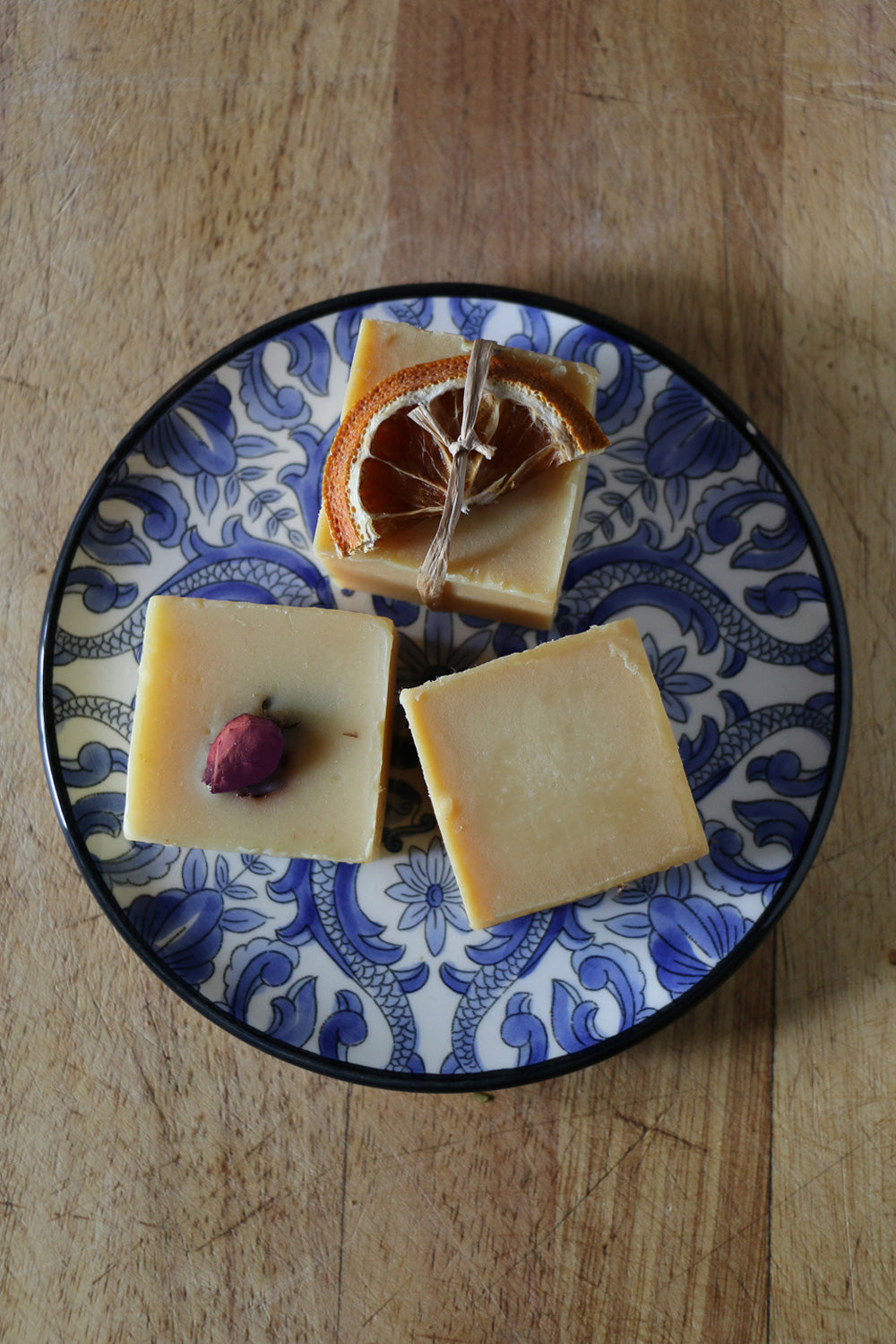
The result of our process.
Method 2:
Join the rest of the thin bar with a new bar of the same type and let them dry together until the next day.
With these gestures, we make the most of our natural soap bars. I recommend saving the soap scraps in a container until you have accumulated a minimum of 200 g.
For me, it is a great satisfaction to be able to make use of things, and if the result is a success, even more so. I would love to know if these recommendations have been useful to you and to hear about your results.
_____________________________
*This is not a soap-making course, but a recommendation for using up the scraps of our natural soaps.


3 comments
Que buena idea!! Siempre he acumulado los restos y me negaba a tirarlos pero no sabía cómo reutilizarlo. Muchas gracias por tu publicación!!🌷🙏🌷
Gracias por tu sugerencia me encanta hacer jabón y cremas naturales. Mi piel también es atópica
Me ha encantado!! Lo pondré en práctica!! Siempre hay que reciclar y más éstos jabones tan deliciosos!!
Muchas gracias Amelia ❤